
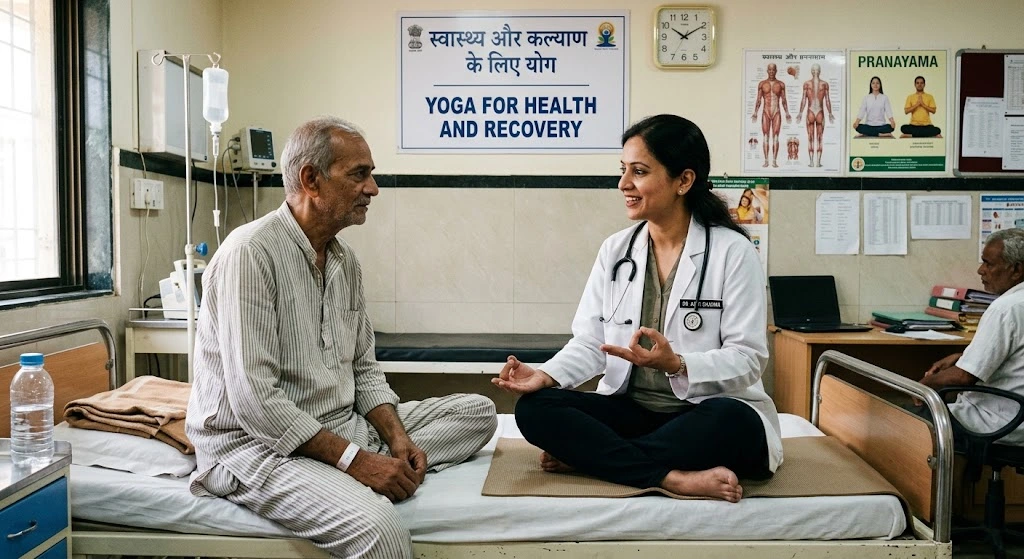

Walk into any introductory yoga studio or fitness center, and ask a room full of beginners why they finally decided to show up. A few might tell you they want to run a marathon or get into shape for a beach vacation. But the vast majority will tell a very different story:
“My back has been aching for six months.”
“My doctor told me my blood pressure is entering the danger zone.”
“I had a panic attack last month, and my therapist suggested yoga.”
For millions of people, exercise and yoga are not viewed as daily rituals for thriving — they are treated as emergency medicine. We treat movement like a prescription drug: something bitter to consume only after the diagnosis arrives.
This reactive approach to health is one of the most pervasive, costly, and self-defeating patterns of modern life. But why are we wired to wait until we are broken before we start trying to fix ourselves? And more importantly, how can we reframe a proactive yoga and fitness practice as a foundation for daily living rather than an act of panic control?
The Doctor’s Pad as the Ultimate Motivator
There is an old saying in medicine: people do not change when they see the light; they change when they feel the heat.
For many, a routine medical checkup serves as that moment of heat. When a physician looks across a desk and uses heavy, concrete terms — pre-diabetes, chronic hypertension, spinal degeneration, elevated cortisol — the abstract concept of “health” suddenly becomes immediate and terrifying.
Before that moment, physical inactivity feels harmless. Sitting at a desk for nine hours, skipping daily walks, and ignoring tight hamstrings or a stiff lower back carry no immediate penalty. The human body is remarkably resilient, capable of absorbing years of silent strain without raising a glaring red flag.
When a doctor finally issues a warning, it bridges the gap between our current habits and their future consequences. The physician’s advice grants us explicit permission — and a sharp ultimatum — to prioritize ourselves. Suddenly, rolling out a yoga mat or going for a 30-minute brisk walk is no longer an optional luxury; it becomes a non-negotiable task.
The Illusion of Invincibility and the “Someday” Trap
Why don’t we start sooner? The primary barrier is a psychological phenomenon known as present bias — our inclination to value immediate rewards over future benefits.
When you are feeling reasonably well, the immediate reward of relaxing on the couch far outweighs the distant, abstract reward of avoiding illness twenty years down the line. We tell ourselves:
- “I’m fine right now, so I don’t need to push myself.”
- “I’ll start going to yoga once work calms down.”
- “I’m not sick, so my body is doing just fine.”
We mistake the absence of disease for the presence of vitality. Just because you are not actively lying in a hospital bed does not mean your body is functioning at its peak. Muscle mass quietly declines after age thirty, joint mobility degrades, and cardiovascular endurance steadily shrinks without regular challenge. Because these losses happen gradually over years, we rarely notice them — until a sudden injury or illness brings everything to a halt.
Sick-Care vs. Health-Care: A Cultural Shift
Part of the problem lies in how society views wellness. Our healthcare systems are largely structured around sick-care — treating symptoms, managing chronic conditions, and performing surgery after something breaks. We apply this same logic to movement:
- Traditional Reactive Approach: Normal Life (Inactivity) → Health Crisis / Doctor’s Warning → Emergency Exercise → Temporary Recovery
- Proactive Wellness Approach: Daily Movement (Fitness & Yoga) → Physical & Mental Resilience → Long-Term Vitality & Prevention
When we treat yoga or cardiovascular training purely as a response to illness, we miss their greatest power: prevention and optimization.
- Yoga is not just physical therapy for a bad lower back; it is a profound system for nervous system regulation, joint hygiene, dynamic balance, and mental clarity.
- Fitness and strength training are not merely remedies for sluggish metabolism or weak bones; they are the literal foundation for functional independence as we age.
When practiced proactively, movement acts as an insurance policy. It builds what physicians call “physiological reserve” — the body’s capacity to withstand physical stress, trauma, or illness when life inevitably throws a curveball.
From Emergency Remedy to Daily Ritual
Breaking out of the reactive trap requires a fundamental shift in how we perceive fitness and yoga. Movement should not be a punishment for what you ate or a panic response to a lab test; it should be a daily investment in your future self.
Here is how to shift from reactive fear to proactive practice:
- Lower the Activation Energy. When people wait for a doctor’s order, they often feel pressured to jump into extreme, overwhelming routines. Instead, start small. Ten minutes of gentle yoga stretching in the morning or a fifteen-minute daily walk carries far more long-term value than an intense, two-hour workout done out of panic once a month.
- Redefine What “Wellness” Feels Like. Don’t measure the success of your practice by weight loss or medical metrics alone. Pay attention to immediate, qualitative feedback:
- How do your joints feel when you get out of bed?
- How deeply are you sleeping?
- How calm is your mind during a stressful afternoon?
Recognizing these daily benefits creates an internal reward system that doesn’t rely on a physician’s approval.
- Treat Movement as Hygiene, Not Medicine. You do not wait until your teeth are decaying to start brushing them; you brush them daily to keep them healthy. Physical movement belongs in the exact same category. Yoga and fitness are physical and mental hygiene — a baseline requirement for taking care of a human body.
The Ultimate Goal: Thriving, Not Just Surviving
You do not need to wait for a crisis to earn the right to take care of yourself. You do not need a lab report, a prescription, or a stern warning from a specialist to begin moving, breathing, and building strength.
The ultimate aim of a proactive yoga and fitness practice is not merely to keep us out of the doctor’s office — it is to allow us to live fully, freely, and without physical limitation. By stepping onto the mat today, you aren’t just reacting to the fear of illness. You are choosing the joy of vitality.
At Vimoksh, we help you build that proactive foundation — through practices like Pyramid Meditation and Emotional Healing Readings designed to restore balance before crisis strikes, not after. Begin your journey toward daily vitality with a session in Ras Al Khaimah, UAE.